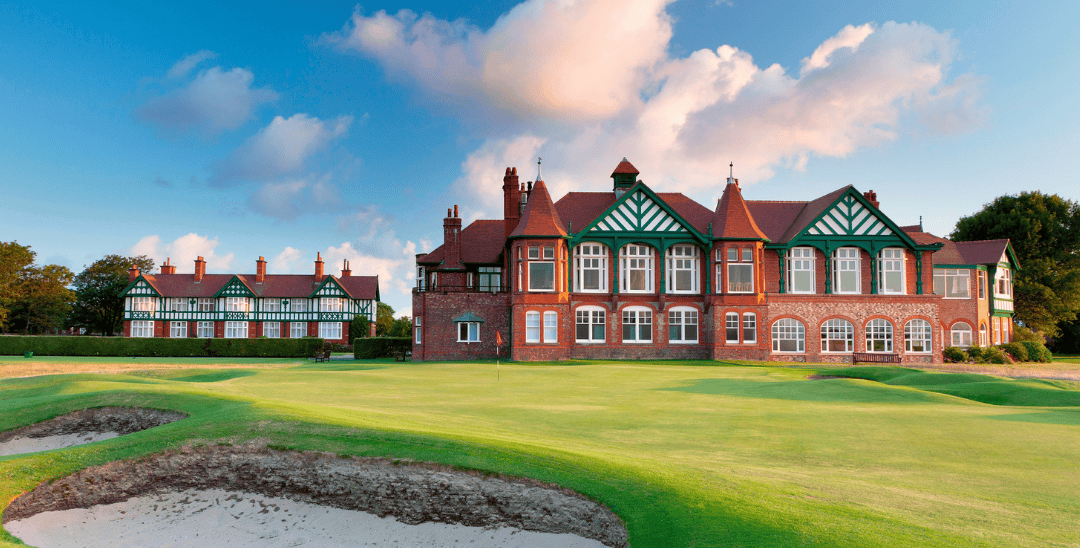
Scotland may be the birthplace of golf, and Ireland may embody romantic coastal links, but England holds a distinct position in the fabric of the game. For discerning golfers planning a British Isles journey, understanding how England’s golf culture differs is essential — not only for setting expectations, but for designing a more intentional itinerary.
England’s identity in golf is quieter, more structured, and in many ways more club-centric than its Celtic neighbors. The experience is less about mythology and more about tradition expressed through architecture, governance, and etiquette.
A Club Culture Built on Structure
English golf clubs often operate within a clearly defined framework of membership, visitor days, and competition calendars. While Scotland and Ireland have long embraced international golf tourism, many English clubs maintain a more domestic orientation.
At venues such as Royal St George’s, Royal Birkdale, and Sunningdale, visitor access is available — but within specific parameters. Tee times are frequently restricted to designated days, dress codes are more formal, and clubhouse traditions are carefully preserved.
For travelers, this means planning matters. Understanding visitor policies and booking windows well in advance is not optional; it is part of the culture.
Architectural Identity: Precision Over Drama
England’s championship courses carry a distinctive architectural character. Where Ireland often delivers raw, rugged dune landscapes and Scotland emphasizes ancient links land molded by time, England frequently presents a more refined expression of coastal and heathland golf.
The great English links —
Royal St George’s, Royal Lytham & St Annes, and
Royal Birkdale — are defined by strategic bunkering and controlled corridors. Inland, England’s heathland masterpieces such as
Sunningdale, Walton Heath, and
Swinley Forest showcase firm turf, heather-lined fairways, and subtle elevation changes.
These courses reward precision and thoughtful positioning rather than sheer power. The aesthetic may appear understated at first glance, but strategic complexity reveals itself over multiple rounds.
The Open Championship Legacy
England’s golf culture is also deeply tied to The Open Championship. The country has hosted the event more frequently than any other outside Scotland, and those legacy influences course conditioning standards and club prestige.
Playing an Open venue in England feels different. There is an unmistakable sense of tournament readiness — fairways defined with clarity, bunkers edged sharply, greens prepared with discipline. Even outside championship years, the expectation of excellence remains embedded in the course presentation.
This tournament heritage shapes both perception and reality.
Pacing and Routing Realities
England’s geography requires thoughtful routing. Unlike Scotland’s concentrated regions such as Fife or East Lothian, England’s marquee courses are spread across multiple coastal corridors — Kent in the southeast, Lancashire in the northwest, Norfolk on the east coast.
Attempting to combine too many regions in one trip often results in unnecessary transfers. A more intelligent approach focuses on one corridor — for example, the southeast cluster of Royal St George’s, Prince’s, and Royal Cinque Ports — paired with time in London or the countryside.
This measured pacing aligns with England’s overall tone: deliberate, structured, refined.
Clubhouse Tradition and Etiquette
One subtle but meaningful difference lies in clubhouse culture. English clubs often retain stronger formal traditions than many modern Scottish or Irish venues. Jackets and ties may still be required in dining rooms. Mobile phone use is more restricted. Guest introductions follow established protocol.
For seasoned travelers, this structure enhances the experience rather than restricts it. It reinforces the sense of stepping into a living institution, not merely a golf facility.
Understanding and respecting these nuances elevates the visit.
Beyond the Fairways: Countryside and Culture
England’s appeal extends beyond golf architecture. The countryside offers stately homes, historic market towns, and pastoral landscapes that feel quintessentially British. London adds a cultural dimension unmatched in the Isles — world-class museums, theatre, and refined dining.
Wine regions in Sussex and Kent have quietly emerged as serious producers of sparkling wines, offering a contemporary lifestyle layer that pairs naturally with southeast England itineraries. Combined with traditional pubs, coastal seafood, and countryside inns, the off-course experience carries quiet sophistication.
Why the Difference Matters
For golfers comparing Scotland, Ireland, and England, the choice is not about superiority — it is about alignment.
Scotland delivers history in its purest form.
Ireland offers drama and warmth.
England provides structure, refinement, and strategic depth.
England feels composed. Its courses demand precision. Its clubs protect tradition. Its routing rewards patience. The culture does not shout; it presents itself with confidence.
For discerning golfers seeking a British Isles journey that blends championship pedigree with understated sophistication, England offers a distinctly different — and deeply rewarding — perspective on the game.
Discover England with Elite Golf Experiences — where championship golf and authentic culture & gastronomy come together seamlessly.