Vietnam has quietly evolved from an emerging golf destination into one of Asia’s most compelling luxury golf frontiers. Over the past decade, international investment, award-winning course architecture, and high-end hospitality development have transformed the country’s coastline and cultural centers into serious contenders on the global golf stage.
For discerning golfers who have already experienced Scotland, Ireland, and Spain, Vietnam offers something different — modern championship golf combined with deep cultural immersion, exceptional cuisine, and strong value relative to established markets. But planning a Vietnam golf itinerary requires strategic insight, timing awareness, and proper routing to elevate the journey from good to extraordinary.
Access, Infrastructure & Why Timing Matters
Vietnam’s golf growth has been deliberate and geographically strategic. The strongest concentration of world-class courses is found in three key regions: Hanoi and Ha Long Bay in the north, Da Nang and Hoi An along the central coast, and Ho Chi Minh City in the south.
Direct international access has improved significantly, but long-haul routing from North America and Europe still requires thoughtful flight planning. Breaking the journey into two segments with a comfortable stopover — for example in Tokyo, Seoul, or Singapore — can dramatically improve arrival energy and first-round performance.
Practical planning insight: If your itinerary includes the central coast (Da Nang/Hoi An), it is wise to schedule your first round no earlier than 24 hours after arrival. Even seasoned travelers underestimate jet lag’s impact on focus and coordination. A soft-landing day with light exploration and a proper night’s rest protects the quality of the golf experience.
Seasonality is equally important. The ideal window for a luxury golf itinerary in central Vietnam is February through April, when temperatures are moderate and rainfall is low. The north and south follow different weather patterns, so aligning course selection with climate is critical.
Championship Architecture on the Central Coast
The central coast near Da Nang has become Vietnam’s architectural centerpiece — and much of that credibility comes from the caliber of designers involved.
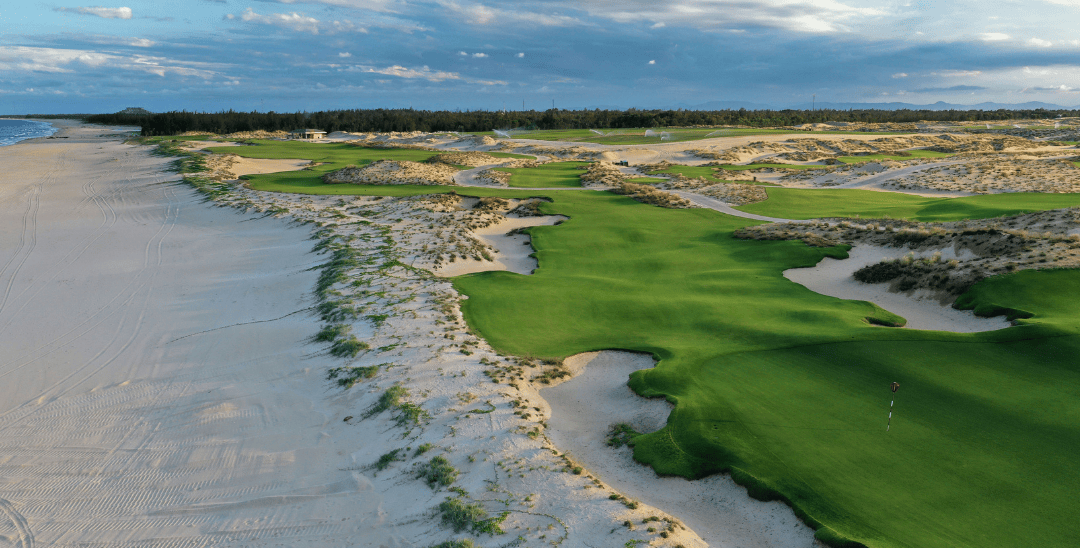
Hoiana Shores Golf Club, widely regarded as one of the top layouts in Southeast Asia, was designed by Robert Trent Jones Jr., whose global portfolio includes Chambers Bay (host of the 2015 U.S. Open) and numerous environmentally sensitive coastal designs. At Hoiana, his philosophy is clear: wide playing corridors, strategic bunkering, and wind-driven decision-making along the South China Sea. It is a true links-style test in a part of the world where few expected to find one.
Ba Na Hills Golf Club, designed by Luke Donald, presents a different character. Set inland in the foothills near Da Nang, it offers dramatic elevation changes, framed tee shots, and a modern championship layout that rewards positional play. Its conditioning standards and night golf capability have made it a standout in Asia.
Further north,
Laguna Golf Lang Co, designed by Sir Nick Faldo, integrates rice paddies, jungle-covered hillsides, and coastal dunes into one routing. Faldo’s design signature — risk-reward options with strategic bunkering and visually intimidating approaches — is evident throughout. It is a layout that tests decision-making more than power.
What often surprises experienced golfers is the conditioning standard. Fairways are firm, greens are consistent, and practice facilities reflect international management oversight and long-term investment. This is not experimental golf infrastructure — it is fully established championship golf.
A Moment That Stays With You
One of the most telling experiences happens not on the tee box, but walking off the 18th green. At Hoiana Shores, as the sun drops toward the sea and the wind softens, there is a quiet stillness that feels far removed from crowded Western golf destinations. You realize you are playing championship golf in a place that still feels undiscovered.
That sense of space — physical and mental — is part of Vietnam’s appeal.
Cultural Immersion Beyond the Fairways
Vietnam’s depth reveals itself quickly.
In Hoi An, lantern-lit evenings unfold along the Thu Bon River, where centuries-old merchant houses reflect a trading past influenced by China, Japan, and Europe. In Hanoi, French colonial architecture blends with vibrant street markets and historic temples. A cruise through Ha Long Bay’s limestone karsts offers one of Southeast Asia’s most iconic natural landscapes.
This layering of history and daily life gives Vietnam dimension. It is not curated for tourists — it is lived, authentic, and welcoming.
Culinary Identity & Regional Character
Cuisine is central to the Vietnam experience. Each region carries distinct culinary identity. Northern dishes emphasize balance and subtlety. Central Vietnam brings spice and intensity. Southern cuisine reflects tropical abundance and French influence.
From refined tasting menus in contemporary restaurants to street-side pho that rivals Michelin kitchens in flavor precision, Vietnam rewards culinary curiosity. Wine culture is emerging, and craft cocktail programs in major cities are increasingly sophisticated — creating natural pairing opportunities within a broader lifestyle journey.
Women Golfers & Community Experience
Vietnam has proven particularly well-suited for women’s golf journeys. Attentive caddies — often female — enhance both pace of play and course strategy. Resort environments feel safe, welcoming, and community-oriented.
The combination of cultural richness, approachable course setups from forward tees, and well-managed hospitality creates an environment that supports both connection and confidence.
Routing, Pacing & Strategic Design
The most common mistake in Vietnam golf planning is overloading the itinerary. Distances between regions require domestic flights, and attempting to combine north, central, and south in a single trip often results in fatigue.
A strategically designed itinerary typically combines two primary regions — for example Hanoi/Ha Long Bay with the central coast — allowing proper rest, cultural immersion, and curated dining experiences. Seamless private transfers and thoughtful pacing are not luxuries here; they are essential to preserving the integrity of the journey.
Vietnam rewards travelers who plan intelligently and move deliberately.
Why Vietnam Now
Vietnam remains in its upward growth phase. International recognition continues to rise, yet access is not oversaturated. That balance creates a valuable window for experienced golfers seeking something intellectually engaging and globally relevant.
For those willing to look beyond traditional markets, Vietnam offers a rare combination: championship golf, authentic culture, culinary depth, and meaningful value — delivered with warmth and professionalism.
Explore Vietnam with Elite Golf Experiences and discover a thoughtfully curated journey where architecture, culture, and cuisine align seamlessly.